
Parquet Floor Restoration
Enquire Today For A Free No Obligation Quote
At Parquet Floor Restoration, we work with hardwood and softwood parquet floors, using traditional methods and modern machinery to restore elegance, durability, and value to each space.
Parquet floor restoration is the process of bringing aged or damaged parquet flooring back to its original condition through precision sanding, repairs, and refinishing.
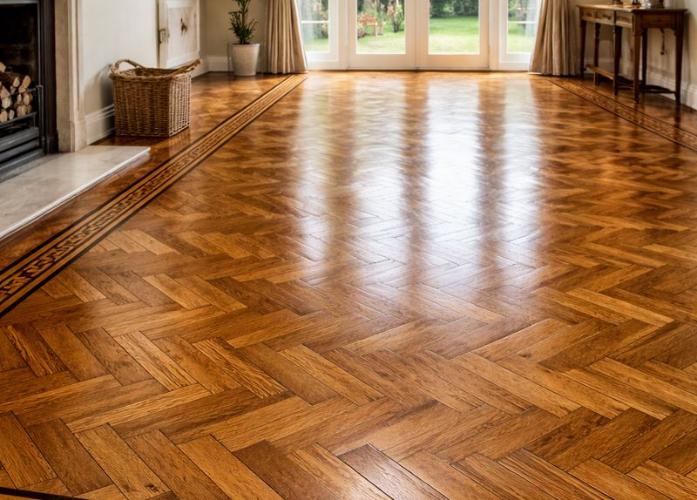
Whether it’s a classic herringbone, basket weave, or mosaic design, parquet adds timeless character to homes, commercial spaces, and heritage buildings.
Request a free site survey from our parquet flooring restoration specialists.
What Is Parquet Floor Restoration?
Parquet floor restoration is a skilled process that involves carefully sanding, repairing, re-bonding, and refinishing parquet flooring to bring back its original appearance.
It can include lifting and re-laying loose blocks, replacing damaged pieces with reclaimed wood, filling gaps, and sealing the surface with an appropriate finish. Since parquet is composed of small blocks arranged in patterns, the restoration process is more detailed than with standard floorboards.
As parquet holds historic and aesthetic value, restoration is essential to retain its craftsmanship and character.
How Much Does Parquet Floor Restoration Cost?
The average cost of restoring parquet flooring ranges from £35 to £60 per m². The cost depends on the floor’s condition, the extent of repairs, the type of timber, and the chosen finish.
Minor restoration involving sanding and sealing typically costs £35–£45 per m², while floors requiring block replacement, re-laying, or specialist finishes may reach £50–£60+ per m². Heritage floors may also involve extra conservation measures.
As parquet requires more detailed work, it is priced higher than straight-laid timber floors but delivers exceptional results.
What Are the Benefits of Restoring Parquet Flooring?
Restoring parquet floors offers both visual and functional improvements. Key benefits include:
- Preserves original craftsmanship and historical features
- Enhances the natural grain, pattern, and texture of timber
- Increases the floor’s durability and longevity
- Adds value to residential or commercial properties
- Offers a sustainable alternative to full replacement
- Compatible with a wide range of finish styles and colours
- Suitable for homes, schools, public buildings, and offices
- Tailored restoration for heritage, domestic, or modern settings
What Types of Parquet Floors Can You Restore?
We restore a wide range of parquet floors, including herringbone, chevron, basket weave, mosaic/finger block, Versailles and panelled styles.
These can be made from oak, walnut, maple, mahogany, teak, or other hardwoods. Whether domestic or commercial, original or recently installed, we assess and restore all types of parquet using the appropriate materials and techniques.
As long as the structure beneath is stable, most parquet floors can be brought back to excellent condition.
Do You Replace Missing or Damaged Blocks?
We replace missing or damaged parquet blocks using either reclaimed matching timber or new pieces cut to size and pattern.
We source reclaimed wood where possible to match grain, species, and age tone, ensuring a seamless blend with the surrounding floor. Re-bonding is done using specialist adhesives, and we fill fine gaps to stabilise the restored sections.
As the detail of parquet is highly visible, we take care to make repairs virtually invisible after sanding and sealing.
Can You Re-Lay Loose or Lifting Parquet?
If the parquet blocks have come loose or lifted due to moisture or subfloor issues, we can carefully lift, clean, and re-lay each section using the correct adhesive and method.
We also assess subfloors (usually concrete or bitumen) and remove old adhesive residues if necessary. The re-laid floor is then sanded and finished evenly to ensure a smooth, level surface.
As re-laying is time-sensitive, we recommend early intervention before blocks become damaged or lost.
How Long Does It Take to Restore a Parquet Floor?
Parquet floor restoration usually takes 2 to 5 days, depending on the size of the area, extent of repairs, and drying time for the finish.
For example, a single room may take 2–3 days, while large halls or commercial spaces may take up to a week. Re-laying or block replacement adds to the timescale, especially when using traditional materials that need to acclimatise before installation.
As finish curing times vary, we provide a tailored schedule for every project.
Is There a Lot of Dust During Parquet Sanding?
We use dustless sanding equipment designed for fine flooring work, which extracts up to 98% of dust generated during sanding.
Edges, corners, and around radiators are carefully hand-finished using compact machines, and the area is vacuumed throughout the process. Although a minimal amount of fine dust may remain, we take care to leave each site clean and tidy.
As parquet restoration is detailed work, maintaining a clean environment is part of our professional standard.
What Finish Should I Choose for a Parquet Floor?
We offer a wide range of finishes for parquet floor restoration, including hard-wearing lacquers (matt, satin, gloss), traditional hardwax oils for a natural look, stains to adjust tone or enhance grain, wax or French polish for heritage properties.
The choice depends on usage, aesthetics, and maintenance preferences. For high-traffic areas, we often recommend commercial-grade lacquers. For a warm, classic look, oil-based finishes are ideal.
As parquet patterns are visually striking, the finish plays a key role in enhancing their depth and contrast.
Can You Restore Parquet Floors in Listed or Heritage Properties?
We specialise in restoring parquet floors in listed buildings, heritage sites, churches, and historic homes.
We use conservation-appropriate techniques, source reclaimed materials, and work in line with listed building guidelines. Finishes such as wax or natural oil are often used to preserve period authenticity.
As heritage floors are valuable assets, we take great care to retain their original design and construction.
Can You Restore Commercial or Public Parquet Floors?
We restore parquet flooring in commercial settings such as town halls, hotels, galleries, schools, and museums.
We use quick-drying, durable finishes and offer flexible working hours to minimise disruption. Our team can handle large-scale parquet restoration projects, including gymnasiums and entrance halls with high foot traffic.
Since commercial floors require resilience and fast turnaround, we adapt our methods and materials to suit.
Can Parquet Floors Be Restored If Installed Over Concrete?
We can restore parquet flooring laid over concrete, provided the floor is structurally stable and well-bonded.
Many older parquet floors were fixed to concrete using bitumen, which may degrade over time. In these cases, we clean or remove the old adhesive and re-bond any loose blocks using modern, moisture-resistant adhesives. The floor is then sanded and refinished as normal.
As subfloor moisture can impact parquet stability, we always test humidity and use appropriate primers or damp-proof barriers if needed.
Can Parquet Floors Be Refinished If They Were Previously Waxed?
Previously waxed parquet floors can be professionally refinished,though they require a specific wax removal process before sanding and sealing.
Wax residues can interfere with new finishes, especially lacquers, so we use wax-stripping solutions and mechanical cleaning before sanding. Once fully cleaned and sanded, the floor can be refinished in your chosen oil, lacquer, or stain.
As wax can penetrate deeply into timber, careful preparation is essential to ensure adhesion of the new finish.
Can Parquet Be Sanded If There’s Underfloor Heating?
We restore parquet floors with underfloor heating systems, taking precautions to avoid heat-related damage during the sanding and finishing stages.
We ask clients to switch off the heating at least 24 hours prior to restoration to stabilise timber moisture levels. Parquet finishes are selected based on their compatibility with radiant heat, avoiding those that may crack or discolour under fluctuating temperatures.
As parquet blocks are smaller and more prone to expansion, our team manages sanding depth and temperature carefully.
Can You Stain Parquet Floors a Different Colour?
Parquet floors can be stained to achieve a new tone or colour prior to sealing.
We offer a wide range of stain shades, from light oak and antique pine to walnut, grey, and bespoke blends. The stain is applied after sanding but before sealing, allowing full absorption into the timber.
Since different wood species absorb stain differently, we conduct a sample patch test to confirm the final colour.
Why Do Some Parquet Blocks Move or Lift?
Movement in parquet floors is often caused by moisture fluctuations, subfloor failure, or degraded adhesive, especially in older floors.
When humidity rises, timber expands and may lift. Conversely, dry environments can cause shrinking and gaps. We address these issues by replacing failed adhesives, improving subfloor moisture barriers, and re-laying affected areas using modern methods.
As movement affects both appearance and safety, early inspection helps prevent further damage.
How Often Should Parquet Floors Be Restored?
Parquet floors typically need full restoration every 10–15 years, depending on use, traffic levels, and finish type.
In busy homes or commercial settings, maintenance coats may be applied every 3–5 years to extend the lifespan without full sanding. Modern finishes offer longer-lasting protection, but parquet should be monitored for dullness, scratches, or signs of wear.
As over-sanding can thin blocks, we aim to restore only when necessary and preserve the floor’s integrity.
Will Restoration Affect the Acoustic Quality of the Floor?
Restoring parquet floors can slightly alter acoustics in a room, particularly if a new finish creates a harder or smoother surface.
Glossy finishes tend to reflect sound more than oils or matt sealants. If echo or footfall noise is a concern, we can recommend acoustic underlays, soft furnishings, or felt pads under furniture to dampen reflections.
Since parquet is often used in performance and public spaces, we’re happy to advise on finishes that balance durability with acoustic comfort.
Are Restored Parquet Floors Slippery?
No, restored parquet floors are not inherently slippery if finished with the correct sealant.
We use anti-slip lacquers and oils with varying sheen levels to provide both aesthetics and safety. For homes with children, elderly residents, or pets, we recommend matt or satin finishes that offer better grip than high-gloss options.
As safety is a top priority, we choose finishes that comply with modern slip-resistance standards where required.
Can You Restore Parquet Floors Damaged by Water?
We can restore parquet floors affected by leaks, floods, or high humidity, depending on the extent of the damage. Water can cause blocks to lift, darken, or expand unevenly.
We assess moisture levels, remove damaged areas, and replace or re-lay blocks as needed. After drying and stabilisation, the full floor can be sanded and refinished. Since parquet reacts quickly to water, fast intervention improves the likelihood of full restoration.
Are There Eco-Friendly Options for Parquet Floor Restoration?
We offer low-VOC (volatile organic compound) finishes, reclaimed wood for repairs, and environmentally responsible sanding systems for parquet restoration.
Rather than replacing your floor, restoration reuses the original material and avoids landfill waste. We also use sustainably sourced products and machinery with energy-efficient dust extraction.
As more clients prioritise environmental choices, we provide options that reduce the carbon footprint of your restoration project.
How Do I Book a Parquet Floor Restoration?
Simply contact our team to arrange a free site survey and quotation. We’ll assess the floor, identify any repair needs, recommend suitable finishes, and provide a clear cost and schedule for your project.
Whether it’s a single room or a large commercial space, we offer a personalised service from start to finish. As demand is higher in spring and autumn, early booking is advised for time-sensitive projects.
Get in touch with us today for a free site survey for professional parquet floor restoration.
Find More Info
Make sure you contact us today for a number of great parquet floor restoration services.
For more information on parquet floor restoration, fill in the contact form below to receive a free quote today.
★★★★★
Parquet Floor Restoration did an outstanding job bringing our original parquet floors back to life. The craftsmanship and attention to detail were exceptional, and the team worked cleanly and efficiently throughout. We are genuinely impressed with the final finish and would not hesitate to recommend them.
Alistair Hughes
Greater London
★★★★★
We chose Parquet Floor Restoration after seeing their previous work, and they exceeded our expectations. The floors now look better than they have in decades, with a rich, even finish throughout the house. Professional, knowledgeable, and reliable from start to finish.
Henrietta Vaughn
Greater London